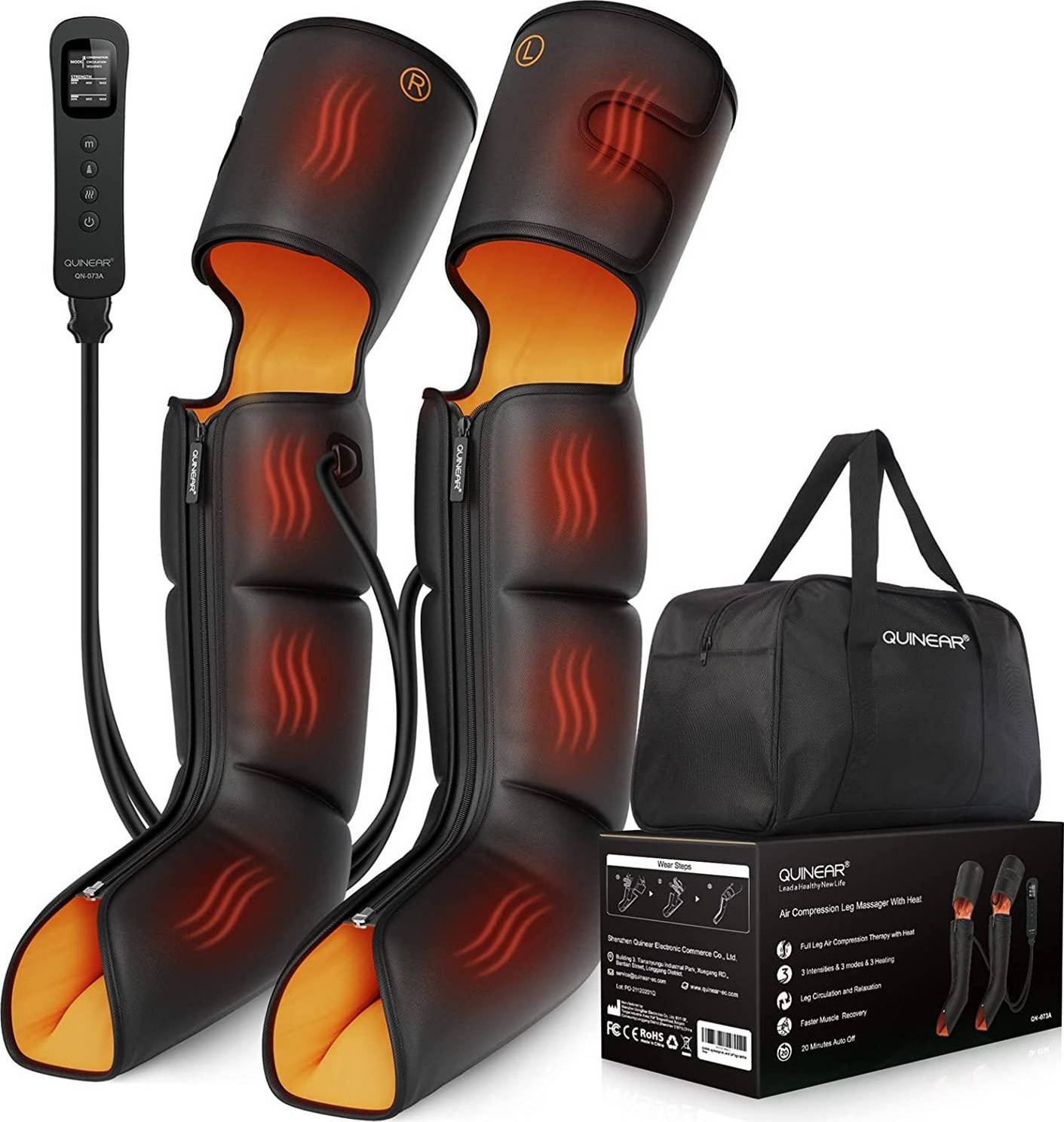
A foot massager may use inflatable sleeves, vibrating surfaces, rotating nodes or electrical stimulation. QUINEAR's foot EMS/TENS model belongs to the last category, while its leg compression boots use air chambers. These technologies create different sensations and carry different safety considerations. The device mechanism should be one of the first things you verify.
What matters most
Choose products by the area covered, comfort, fit and practical setup. Start with gentle pressure, check the manual and avoid treating a consumer wellness device as a substitute for medical care. Retailer pricing and eligibility should be confirmed before purchasing.
Air compression in everyday terms
A pump fills and empties chambers sewn into wearable cuffs. When the chambers inflate they squeeze the covered section, then release. Programs may move pressure through several zones, especially on full-length boots. The device does not deliver electrical stimulation through the sole of the foot.
How EMS and TENS differ
Electrical muscle stimulation (EMS) is intended to stimulate muscle activity via electrical impulses. Transcutaneous electrical nerve stimulation (TENS) applies electrical signals through skin-contact electrodes and is commonly discussed for pain management under appropriate guidance. Consumer devices may combine labels, so read the specific instructions and do not assume all settings are medically indicated.
Research on exercise recovery using intermittent pneumatic compression reports variable results. Some studies suggest modest improvements in perceived soreness, but a definitive performance benefit has not been established. Read the 2024 systematic review for context.
Important precautions for electrical stimulation
Electrical devices may be unsuitable for people with implanted cardiac devices or certain medical conditions. Avoid use where the manufacturer warns against it, and seek medical guidance when pregnant or living with an implanted medical device. Do not place electrodes or stimulate the body in ways the instruction manual forbids.
Which experience do you actually want?
For a rhythmic squeeze around the calves or whole legs, choose an air-compression model. For an entirely foot-focused electrical sensation, a stimulator may be relevant if medically appropriate. Heat is a separate specification. Do not compare pressure intensities against EMS pulse settings as if they measured the same thing.
Verify the retailer category
Online marketplaces sometimes group all of these devices under the same term. Open the specifications and identify power type, stimulation technology, coverage and instructions. Use the seller actual listing and return policy to resolve confusing titles. Clear category labeling matters more than marketing slogans.
The sensation is fundamentally different
Air compression uses inflatable chambers to squeeze the foot or leg externally. EMS/TENS-type devices use electrical stimulation at the skin, so electrode placement, contraindications and sensory tolerance matter in a different way. A mat-style foot stimulator should not be described as sequential pneumatic compression. Check the actual device functions instead of assuming similar category names mean similar benefits.
Choose by mechanism, not marketing language
Compare sleeves and air pumps with electrode contact surfaces, pulse programs and power sources. People with implanted electronic devices should consult a medical professional before electrical stimulation. If you want a rhythmic sleeve squeeze, choose a pneumatic product. If you are interested in an electrical foot device, verify the exact manual and exclusions.
Identify exactly what touches the skin
For air compression vs ems/tens foot massagers, treat this as a practical decision rather than a marketing checkbox. Start by identifying what the device manual actually says about identify exactly what touches the skin. A photograph or marketplace headline rarely communicates the complete setup, included accessories, contraindications or sizing range. Document the details from the exact model you plan to buy. If the listing is ambiguous, verify it with the manufacturer before purchasing rather than relying on broad claims that apply to an entire product category.
Examine contraindications by mechanism
Apply examine contraindications by mechanism to your own schedule and physical space. Think about whether you can sit comfortably, reach the stop control without assistance, put on and remove the equipment safely, and keep cords or straps clear of obstacles. These mundane factors strongly influence satisfaction even when they are missing from a flashy product demonstration. When another user in your household may share the system, measure their fit independently and follow appropriate cleaning guidance.
Compare power and consumables
When reading retailer reviews about air compression vs ems/tens foot massagers, distinguish first-hand observations about packaging, fit, noise, durability and ease of use from claims of medical effects. A star score alone cannot tell you whether a buyer chose the same product size or configuration. Look at the date of the review, any disclosed incentive and whether the feedback concerns the exact model. Reviews should inform purchasing judgment, not substitute for product documentation or independent safety advice.
Understand pressure versus pulses
For US shoppers, evaluating understand pressure versus pulses also means checking the offer itself. Confirm the posted USD price, shipping charges and checkout tax, along with any return shipping responsibility and eligibility conditions. Preserve the complete receipt and delivery information after you order. A supplier's fee on a separate marketplace does not prove that your purchase is always a certain percentage less expensive. Trust clear and consistent terms over a dramatic sale graphic.
Consider foot sensitivity
The safest place to begin is the official model-specific instruction manual. Different devices may apply sequential air pressure, mild heat or electrical pulses, and instructions from one category should not be transferred automatically to another. A mild and comfortable initial setting is more sensible than an intense first trial. Stop immediately if you experience pain, numbness or unusual skin changes, and seek medical advice if you have symptoms or a condition that affects safe device use.
Review session programming
If review session programming matters to you, compare at least two models in the same functional category. A thigh-length sleeve and a calf-only wrap cannot be fairly scored on identical coverage. A rechargeable unit may trade away simplicity for portability, while a wired device can be convenient when used in one chair. Put fit, controls, setup effort and real total cost in a short comparison. The model that best meets your needs is not automatically the most expensive model.
Avoid mismatched device promises
After purchase, use avoid mismatched device promises as a checkpoint. Confirm the unit in the box matches the exact model you ordered, keep the instructions, and inspect it for transit damage before use. Follow fabric cleaning, cable routing, storage and battery care requirements in the manual. If something is missing or the item cannot be used safely, contact the seller through the published support channel and follow the documented return process rather than improvising a repair.
Choose by the sensation you prefer
Finally, put choose by the sensation you prefer in perspective. At-home recovery equipment may feel comfortable during a seated break, but a consumer device should not be relied on to diagnose an illness, resolve unexplained swelling, prevent blood clots or guarantee athletic performance. The research on pneumatic compression and exercise recovery is mixed and effect sizes are often modest. If you have vascular disease, recent surgery, sudden symptoms or another relevant medical concern, a qualified clinician is a more appropriate source of personal advice than generic online marketing.
A useful US buyer's checklist
Before adding a EMS TENS foot massager vs compression to your routine, answer the questions below. A well-fitted product with transparent retailer terms is often more useful than an impressive list of claims.
- What exact body area does the massager cover, and does the sizing chart fit?
- Are heat, cordless operation and program settings actually included in this configuration?
- Can you start on a comfortable low setting, reach the controls and clean the sleeves?
- Are there health conditions or symptoms that call for professional advice before use?
- Does the US checkout confirm the real price, discount, delivery time and return terms?
Frequently asked questions
Is a TENS foot unit the same as compression boots?+
No. It uses electrical signals rather than an air pump and chambers.
Are the safety rules interchangeable?+
No. Follow the warnings specific to each technology.
Where can I compare QUINEAR models sold to US shoppers?+
Use the comparison page on this website to check coverage, modes, heat and power, then open Amazon US for actual purchase information.
Sources and reading notes
This educational article references published research and established clinical resources. Model descriptions are based on publicly available product information. This is not individualized medical advice.